Erskine, Ebenezer-Works

The Whole Works Of Ebenezer Erskine
BY EBENEZER ERSKINE

IN EPUB.MOBI & .PDF FORMATS

IT would be great presumption to attempt any recommendation of the following discourses, when they have had, hitherto, their approbation, in the judgment and experience of so many serious and well-disposed Christians, both at home and abroad: nor will any such thing be expected from one, to whom the worthy Author stood so nearly related as I do.

His praise is already in the churches; and though he be dead, he yet speaketh. His modesty did not permit him to leave any memoirs of his life, for public use.—He was twenty-eight years minister at Portmoak in Fife, and twenty-three at Stirling.—He died in the seventy-fourth year of his age.

It is hoped, that whoever shall, in a dependence upon the divine blessing, peruse the valuable treasure contained in this volume, shall find many things, (as the renowned Mr Hervey expresses it,) “to the edification of their hearts, in true faith. “solid comfort, and evangelical holiness.”—That this may be the case with multitudes, is the sincere desire of

JAMES FISHER.

GLASGOW,

Feb. 10, 1761.

—–

Table of Contents

Preface

Preface to the First Sermon

I. GOD’S little remnant keeping their garments clean in an evil day – Rev. 3:4.

II. The backslider characterised: or, the evil and danger of defection described – Heb. 10:38.

III. The wind of the Holy Ghost blowing upon the dry bones in the valley of vision – Ezek. 37:9.

IV. The King is held in the galleries – Song of Sol. 7:5.

V. The groans of believers under their burdens – Psal. 38:9. Rom. 8:26.2 Cor. 5:4.

VI. The believer exalted in imputed righteousness – Isa. 45:24, 25.

VII. The humble soul the peculiar favourite of heaven – Job 22:29. 1 Pet. 5:5, 6. Psal. 138:6

VIII. The necessity and profitableness of good works asserted – 2 Cor. 7:1. Rev. 22:14.John 7:17.

IX. Christ in the believer’s arms – Psal. 73:25. Luke 2:28.

X. A discourse on the throne of grace – Psal. 89:14.

XI. The assurance of faith opened and applied – Heb. 10:19, 22.

XII. God in Christ, a God of love – 1 John 4:16.

XIII. Unbelief arraigned and condemned at the bar of God – John 16:8, 9. John 3:18.

XIV. The day-spring from on high – Luke 1:78

XV. The rainbow of the covenant surrounding the throne of grace – Rev. 4:3.

XVI. The tree of life shaking her fruits and leaves among the nations – Rev. 22:2.

XVII. The law of faith issuing forth from mount Zion – Isa. 2:3.

XVIII. The stone rejected by the builders exalted as the head-stone of the corner – Psal. 118:22.

XIX THE government upon Christ’s shoulder – Is. 9:6.

XX. A treasure of gospel-grace digged out of Mount Sinai; or, the sinner’s claim of right cleared from God’s covenant with Israel and Sinai – Exod. 20:2, 3.

XXI. The standard of heaven lifted up against the powers of hell, and their auxiliaries – Is. 59:19.

XXII. The Believer’s journey from the wilderness of this world, to the Heavenly Canaan – Song 8:5.

XXIII. The true substance and strength of a church and nation – Isa. 6:13.

XXIV. The first promise accomplished; or, the head of the Serpent bruised by the seed of the woman – 1 John, 3:8.

XXV. Courageous faith – Psa. 23:4.

XXVI. The solemnity of Christ’s ascension to the throne of glory – Psa. 47:5.

XXVII. The wrath of man bounded by the power of God – Psa. 76:10.

XXVIII. The name of God glorified in Christ – Exod. 23:21.

XXIX. The tabernacle of David ruined by man, and reared up by the mighty God – Amos 9:11.

XXX. The annals of redeeming love, with the Redeemer’s vengeance upon the grand enemy of the redeemed. – Isa. 63:4.

XXXI. The sovereignty of Zion’s king – Psa. 2:6.

XXXII. Christ, the resurrection, and the life – John 11:25.

XXXIII. A LAMP ordained for God’s Anointed – Psa. 132:17.

XXXIV. The Angel’s seal set upon God’s faithful servants, when hurtful winds are blowing in the church militant – Rev. 7:1, 2, 3.

XXXV. Christ considered as the nail, fastened in a sure place, bearing all the glory of his father’s house – Psa. 20:5; Is. 22:24.

XXXVI. A robbery committed, and restitution made, both to God and man – Psa. 69:4.

XXXVII. Worthless man much regarded by the mighty God – Psa. 144:3.

XXXVIII. The human nature preferred unto the angelical – Heb. 2:15.

XXXIX. The broken law magnified and made honourable – Is. 43:21.

XL. The wise Virgins going forth to meet the Bridegroom – Matt. 25:6.

XLI. The New Testament Ark opened against the deluge of divine wrath – Heb. 11:7.

XLII. The plant of renown – Ezek. 34:29.

XLIII. God’s doves flying to his windows – Is. 60:8.

XLIV. Christ set up from everlasting – Prov. 8:23.

XLV Abraham rejoicing to see Christ’s day afar off – John 8:56.

XLVI. Christ, as the breaker, opening all passes to glory that were impassible – Micah 2:13.

XLVII. Ethiopia stretching out her hands to God – Ps. 68:31.

XLVIII. The kingdom of God within the soul of man – Luke 17:21.

XLIX. Gospel treasure in earthen vessels – 2 Cor. 4:7.

L. The character of a faithful minister of Christ – Col. 1:7.

LI. Christ in the clouds, coming to judgment – Matt. 16:37.

LII. The word of salvation – Acts 12:16.

19https://www.monergism.com/whole-works-ebenezer-erskine

Posted in E-authors, Works | Tagged , , | Comments Off on Erskine, Ebenezer-Works

Brooks, Thomas -Works

The Works of Thomas Brooks (eBook)

BY THOMAS BROOKS

IN EPUB.MOBI.PDF & DOCX

Thanks to Lionel Dyck for his help in creating the docx version

The Works of Thomas Brooks is an extremely important addition to your library because it discusses many topics that are relevant to the daily life of a Christian, such as gaining assurance, salvation and the faith, repentance and obedience that accompanies it; counteracting Satan’s attacks and that God is enough to supply all our needs. Also covered is the importance of prayer, the power it can have in our lives; the riches Christ has to bestow on us; the necessity, excellency, rarity, beauty and the glory of holiness & dealing with suffering.

Little is known about Thomas Brooks as a man, other than can be ascertained from his many writings. Born, probably of well-to-do parents, in 1608, Brooks entered Emmanuel College, Cambridge, in 1625. He was licensed as a preacher of the gospel by 1640 at the latest. Before that date he seems to have spent a number of years at sea, probably as a chaplain with the fleet. After the Civil War, Brooks became minister at Thomas Apostle’s, London, and was sufficiently renowned to be chosen as preacher before the House of Commons on 26 December, 1648. Three or four years later he moved to St Margaret’s, Fish-street Hill, London, but encountered considerable opposition as he refused baptism and the Lord’s Supper to those clearly ‘unworthy’ of such privileges. The following years were filled with written as well as spoken ministry. In 1662 he fell victim to the notorious Act of Uniformity, but he appears to have remained in his parish and to have preached the Word as opportunity offered. Treatises continued to flow from his agile pen. In 1677 or 1678 he married for the second time, ‘she spring-young, he winter-old’. Two years later he went home to his Lord.

TABLE OF CONTENTS

Mute Christian Under the Smarting Rod

Precious Remedies Against Satan’s Devices

A Word in Season to Suffering Saints

A Cabinet of Choice Jewels

The Best Wine Reserved Until Last

The Privy Key of Heaven

Heaven on Earth

The Unsearchable Riches of Christ

Apples of Gold

The Golden Key to Open Hidden Treasures

Paradise Opened

https://www.monergism.com/works-thomas-brooks-ebook

Posted in B-authors, Works | Tagged , | Comments Off on Brooks, Thomas -Works

Adams, Thomas- Works of Thomas Adams

The Works of Thomas Adams (eBook)

BY THOMAS ADAMS

IN EPUB.MOBI & .PDF FORMATS

BEING THE SUM OF HIS SERMONS, MEDITATIONS, AND OTHER DIVINE AND MORAL DISCOURSES

2382 pages

Adams was not distinctively a doctrinal writer; but sound evangelical doctrine, according to the school of Augustine and Calvin, forms the basis of his writings. Neither does he enter deeply into Christian experience; but perhaps no preacher ever excelled him in faithfully and vigorously, without fear or favour, or respect of persons, denouncing vice and immorality under all disguises. It is evident in every page of his writings that ‘in his eyes a vile person was contemned.’ The reader will go to him in vain for expositions of Scriptural texts, or for insight into the deeper workings of the Christian heart; but not in vain for a hearty appreciation of all that is good, and as hearty a denunciation of all that he considered to be evil.

His extant writings are all to be given in this series, with the exception of his Commentary on the Second Epistle of Peter, which was reprinted not long ago.

The style of Adams, though frequently disfigured by what I must be permitted to call wretched puns and conceits, is exceedingly lively and racy; sometimes rising into pure eloquence, always clear, vigorous, spirited; a style that, in these days, would be deemed more suitable to our light periodical literature, than to the conventional formalities of the pulpit. Every reader who can appreciate genuine English manliness, decided sentiments, and frankness in expressing them, will receive a rich treat in the perusal of the works of Thomas Adams. He has been styled the Shakspeare of the Puritans; and a claim may be laid to the compliment, as the fertility of his imagination, and his intimate acquaintance with human nature in its graver and lighter moods, are frequently evinced with a power which warrants the comparison.

It only remains to explain that Adams was in the exercise of his ministry while the Authorised Version of the Bible was in preparation. He occasionally refers to it as ‘the new translation;’ but does not seem to have habitually made use of it. In some cases his argument depends upon readings of texts different from that in that Version. It will also be noticed that he quotes the Apocrypha with the same freedom with which he quotes the canonical books.

It will be seen from the address ‘to the Candid and Ingenious Reader,’ that the sermons collected by Adams, and published by him in one folio volume, had previously been published separately. In their original form most of them had dedications prefixed; but, for reasons which do not appear, he deleted many of these. They will all be reprinted in connexion with his Memoir, as they are worthy of preservation on many grounds.

The sermons in this series are arranged according to the order of the texts. This seems to be an advantageous arrangement upon the whole; but it involves the inconvenience, that in a few instances references are made to previous sermons, which in this edition occupy a subsequent place.

—–

Table of Contents

EDITORIAL NOTE

DEDICATIONS—

TO THE CANDID AND INGENIOUS READER

ADVERTISEMENT

MEMOIR OF THE REV. THOMAS ADAMS

SERMONS

I. POLITIC HUNTING, GEN. 25:27

II. PLAIN-DEALING, GEN. 25:27

III. THE SOLDIER’S HONOUR, JUDGES 5:8, 9

IV. THE SINNER’S MOURNING-HABIT, JOB 42:6

V. HEAVEN MADE SURE, PSALM 35:3

VI. A GENERATION OF SERPENTS, PSALM 58:4

VII. THE RAGE OF OPPRESSION, PSALM 66:12

VIII. THE VICTORY OF PATIENCE, PSALM 66:12

IX. GOD’S HOUSE, PSALM 66:13

X. THE SACRIFICE OF THANKFULNESS, PSALM 118:27

XI. GOD’S BOUNTY: THE FIRST SERMON, PROV. 3:16

XII. GOD’S BOUNTY: THE SECOND SERMON, PROV. 3:16

XIII. THE FATAL BANQUET: THE FIRST SERMON, PROV. 9:17, 18

XIV. THE FATAL BANQUET: THE SECOND SERVICE, PROV. 9:17

XV. THE FATAL BANQUET: THE BREAKING-UP OF THE FEAST, PROV. 9:17

XVI. THE FATAL BANQUET: THE SHOT, PROV. 9:18

XVII. THE FOOL AND HIS SPORT, PROV. 14:9

XVIII. MYSTICAL BEDLAM, ECCLES. 9:3

XIX. THE GALLANT’S BURDEN, ISAIAH 21:11, 12

XX. THE SINNER’S PASSING-BELL, JER. 8:22

XXI. PHYSIC FROM HEAVEN, JER. 8:22

XXII. ENGLAND’S SICKNESS, JER. 8:22

XXIII. ENGLAND’S SICKNESS, JER. 8:22

XXIV. HEAVEN AND EARTH RECONCILED, DAN. 12:3

XXV. THE SOUL’S SICKNESS: A DISCOURSE, DIVINE, MORAL, AND PHYSICAL

XXVI. CHRIST’S STAR, MATT. 2:11

XXVII. THE WAY HOME, MATT. 2:12

XXVIII. THE GOOD POLITICIAN DIRECTED, MATT 10:16

XXIX. THE BLACK SAINT, MATT. 12:43–45

XXX. THE LEAVEN, MATT. 13:33

XXXI. THE TWO SONS, MATT. 21:28–30

XXXII. MAJESTY IN MISERY, MATT. 27:51

XXXIII. LYCANTHROPY, LUKE 10:3

XXXIV. THE COSMOPOLITE, LUKE 12:20

XXXV. THE FIRE OF CONTENTION, LUKE 12:49

XXXVI. THE BARREN TREE, LUKE 13:7

XXXVII. FAITH’S ENCOURAGEMENT, LUKE 17:19

XXXVIII. THE LOST ARE FOUND, LUKE 19:10

XXXIX. THE WHITE DEVIL, JOHN 12:6

XL. THE HOLY CHOICE, ACTS 1:24

XLI. A VISITATION SERMON, ACTS 15:36

XLII. THE THREE DIVINE SISTERS: FAITH, HOPE, AND CHARITY 1 COR. 13:13

XLIII. THE TEMPLE 2 COR. 6:16

XLIV. THE CITY OF PEACE 2 COR. 13:11

XLV. THE BAD LEAVEN, GAL. 5:9

XLVI. MAN’S SEED-TIME AND HARVEST, GAL. 6:7

XLVII. SPIRITUAL EYE-SALVE, EPH. 1:18

XLVIII. THE SAINTS’ MEETING, EPH. 4:13

XLIX. THE CHRISTIAN’S WALK, EPH. 5:2

L. LOVE’S COPY, EPH. 5:2

LI. A CRUCIFIX, EPH. 5:2

LII. A DIVINE HERBAL, HEB. 6:7, 8

LIII. THE PRAISE OF FERTILITY, HEB. 6:7

LIV. A CONTEMPLATION OF THE HERBS, HEB. 6:7

LV. THE FOREST OF THORNS, HEB. 6:8

LVI. THE END OF THORNS, HEB. 6:8

LVII. THE HAPPINESS OF THE CHURCH, HEB. 12:22–24

LVIII. SEMPER IDEM; OR, THE IMMUTABLE MERCY OF JESUS CHRIST, HEB. 13:8

LIX. THE TAMING OF THE TONGUE, JAMES 3:8

LX. THE SOUL’S REFUGE, 1 PET. 4:19

LXI. THE SPIRITUAL NAVIGATOR BOUND FOR THE HOLY LAND, REV. 4:6

LXII. PRESUMPTION RUNNING INTO DESPAIR, REV. 6:16

LXIII. HEAVEN-GATE; OR, THE PASSAGE TO PARADISE, REV. 22:14

MEDITATIONS UPON SOME PART OF THE CREED

LXIV. GOD’S ANGER, PS. 80:4

LXV. MAN’S COMFORT, PS. 94:19

https://www.monergism.com/works-thomas-adams-ebook

Posted in A-authors, Works | Comments Off on Adams, Thomas- Works of Thomas Adams

Jackman Joshua People of God’s Purpose

Jackman Joshua People of God’s Purpose is a commentary study on the Old Testament book of Joshua.

Continue reading

Posted in J-authors, Old Testament Studies | Tagged | Comments Off on Jackman Joshua People of God’s Purpose

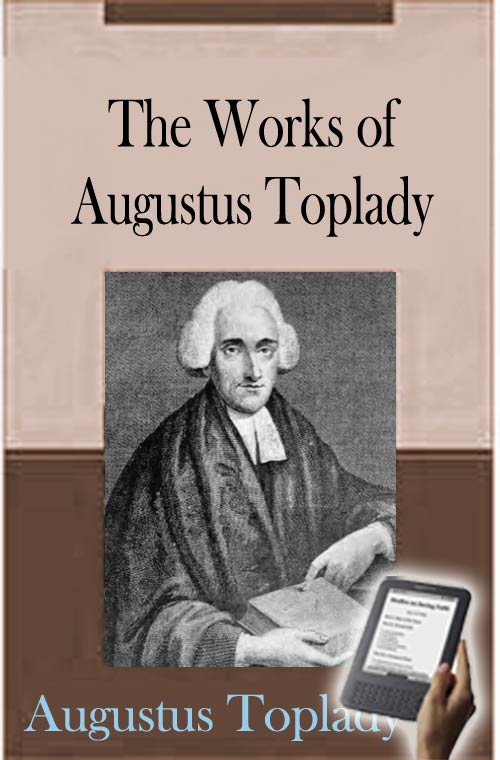
Toplady, Augustus Volumes 1-6

The Works of Augustus Toplady in 6-Volumes (eBooks)

VOLUME 1 –  EPUB.MOBI.PDF
VOLUME 2 –  EPUB.MOBI.PDF
VOLUME 3 –  EPUB.MOBI.PDF
VOLUME 4 –  EPUB.MOBI.PDF
VOLUME 5 –  EPUB.MOBI.PDF
VOLUME 6 –  EPUB.MOBI.PDF

HT: Grace eBooks

In these volumes, the works of eighteenth-century clergyman Augustus M. Toplady are collected. These writings encompass his passionate Reformed stance, and contain many of his sermons, letters, essays, and political writings. Included is Toplady’s historical account of Calvinism and its political and theological impact, biographies of theologians of the day, as well as intense debates over Calvinism with John Wesley. A fervent Calvinist and controversial figure throughout his lifetime, and contemporary of George Whitefield, John Gill, and William Romaine, Toplady also composed several famous hymns, including “Rock of Ages.”

These 6 volumes contain not only a definitive defense of Reformed thinking, but also significant eighteenth-century theological writings. With nearly 3,000 pages of material, the reader will gain a greater understanding of the historical influence of Calvinism, as well as other components of Toplady’s considerable theological knowledge. The Works of Augustus M. Toplady (6 vols.) is essential for any student, professor, or anyone interested in learning more about the doctrine or history of Calvinism.

Key Features

Clear defense of Calvinism
Contains nearly 3,000 pages of theological and historical information
Includes indexes and detailed table of contents


Clock on download to get epub, mobi and pdf files of Volumes 1-6.

https://www.monergism.com/works-augustus-toplady-6-volumes-ebooks

Posted in Anthology, T-authors, Works | Tagged , , | Comments Off on Toplady, Augustus Volumes 1-6

Spurgeon Charles Sermons from John

Sermon from the Gospel of Jophn from the Prince of Preachers

Spurgeon-43-John.epub (6725 downloads )


Spurgeon-43-John.pdf (5236 downloads )


Posted in S-authors, Sermons | Tagged , , , | Comments Off on Spurgeon Charles Sermons from John

Chitwood, Arlen-Esther

FOREWORD
There are two books in Scripture named for women — Ruth and Esther — and no one knows who wrote either book. But both books form major keys to a correct understanding of the whole of Scripture.
Each book, from a typical perspective, covers a complete panorama of the triune Godhead’s dealings with both the Church and Israel. Ruth deals with Christ and the Church, and Esther deals with God and Israel. And the two books together reflect upon and relate the complete story of Scripture, from Genesis to Revelation.
The information provided in these two books is indispensable to a correct understanding of numerous parts of Scripture. And this would be particularly true relative to a correct understanding of the Book of Revelation, for both Ruth and Esther deal heavily with the same subject matter seen in this book.
Thus, any proper exposition of the Book of Revelation will, of necessity, have to draw heavily from both Ruth and Esther — along with other Old Testament books such as Exodus and Daniel — or miss the mark on vital points of interpretation. In this respect, God has provided His Own built-in interpretation of His Word; and that which God has provided is the only completely correct interpretation in existence.
Ruth and Esther form integral parts of the complete Old Testament word picture which God has provided, revealing His plans and purposes as they relate to man and the earth. And this word picture, designed by God Himself, allows the spiritual man, under the leadership of the Spirit (Who gave this Word [II Peter 1:21]), to come into a full and complete understanding of that which has been revealed.
God has provided different parts and facets of the picture in different places throughout Scripture, and the complete picture can be seen only through viewing all of the different parts together, as a unit. Scripture must be compared with Scripture. Only through this means, under the leadership of the Spirit, can man see all of the various “things which God hath prepared for them that love him” (I Cor. 2:9-13; cf. John 16:7-15).
INTRODUCTION
The Book of Esther contains a wealth of information relative to Israel and the nations, having to do mainly with activity occurring at the end of and following the Times of the Gentiles.
The first two chapters, within the typical structure of the book, relate the complete history of Israel — from God’s call surrounding this nation during Moses’ day to that future day when this call will be realized under the One greater than Moses, with Israel then occupying the nation’s proper place, in the Messianic Kingdom.
Then the remaining seven chapters (chs. 3-10) form commentary material for the first two chapters, centering attention on that future time when God will resume His national dealings with Israel, at the end of Man’s Day, terminating at the same place as the first two chapters — Israel occupying the nation’s proper place, in the Messianic Kingdom.
Chapter three begins with the rise of Haman to a high position of power in the kingdom, typifying the future rise of Antichrist to a position of world power in the kingdom near the middle of Daniel’s unfulfilled Seventieth Week. And the remainder of the book reveals Antichrist’s activities (typified by Haman’s activities) as they relate particularly to Israel (typified by both Esther and Mordecai), that which Israel will do because of these activities, Antichrist’s ultimate fall (which marks the end of the Times of the Gentiles), and Israel’s subsequent rise to the position which the nation was called to occupy almost 3,500 years ago when God called the Israelites out of Egypt under Moses.
In the preceding respect, Esther chapters three through ten parallel Revelation chapters six through twenty. And, when studying either book, to gain a proper understanding of the book, it is vitally important that Scripture be compared with Scripture. One book must be studied in the light of the other, among other books (O.T. and N.T.) containing related subject matter as well.
This is simply one of the ways in which God has structured His Word, necessitating comparing Scripture with Scripture in order to gain a correct understanding of that which has been revealed. God, through this means, has provided man with a complete revelation of Himself, His plans, and His purposes.
This complete revelation though can be seen only one place — in the complete Word. And it can be properly seen and understood through only one means — through comparing parts of this revelation with other parts of this revelation, through “comparing spiritual things with spiritual” (I Cor. 2:9-13), viewing and studying the whole of Scripture in this manner.
In this respect, the Book of Esther is an integral and vital link to seeing and understanding the complete word picture which God has provided. Not only must Esther be viewed and studied in the light of related Scripture (e.g., Exodus, Daniel, Revelation, among numerous other books and places in Scripture) but related Scripture must be viewed and studied in the light of Esther as well.
And the importance of Esther in this respect is self-evident. This book is about Israel and the nations, and understanding God’s dealings with Israel in this respect is a central key to understanding the whole of Scripture.
Understand the message of the Book of Esther (comparing Scripture with Scripture), and you can understand what has happened, is happening, and is about to happen relative to Israel and the nations. It was all foretold in the small Book of Esther almost two and one-half millenniums ago.

Posted in Bible Characters, C-authors | Tagged , , | Comments Off on Chitwood, Arlen-Esther